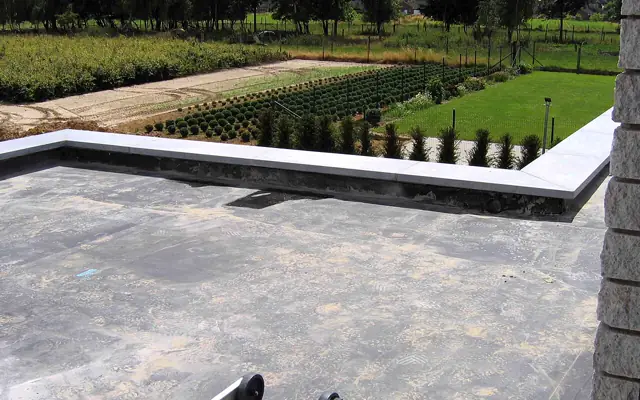
Assessment path
The questions behind a low-slope decision.
Low-slope roof problems are rarely explained by a material label alone. The useful questions often sit at seams, transitions, drains, edges, penetrations, curbs, flashings, and areas that retain water.
An assessment creates a place to name the assembly and the concern before a repair or replacement path is discussed. Actual repair capability, responsible entity, licensing, and project availability remain confirmed per project.
- TPO, PVC, EPDM, modified bitumen, built-up roofing, coatings
- Leak location and active-water status
- Storm date or change in condition, if known
- Building and access context
Scope boundary: This page does not state that every low-slope system is repaired or installed by Justen Newton. It provides an assessment path that preserves the system and condition details needed for a scoped conversation.